
If the damage is limited to a few posts, boards, panels or a sagging gate, and the rest of the fence is still solid, a repair is usually the better choice. If the problems run along most of the fence line, the posts are rotting or rusting through in many spots, or you keep paying for the same fix every year, replacement tends to make more sense. A good rule of thumb many contractors use: once a large share of the fence (often put at around a quarter to a third of it) needs work, start pricing a replacement alongside the repair.

The longer answer depends on the material, the fence’s age and what caused the damage. Here is how to tell the difference, material by material.
Can Your Fence Be Repaired? Signs the Damage Is Fixable
Many fences that look ruined after a storm are in better shape than they seem. Signs you are probably looking at a repair:
- The damage is in one area. A tree limb took out a section, a car backed into a corner post, or one stretch of the fence line sits in a low, wet spot that keeps causing trouble.
- Most posts are still firm. Push on the posts along the run. If the large majority do not move, the backbone of the fence is in good shape.
- The problem is hardware, not structure. Loose hinges, a latch that no longer lines up, missing screws, or a gate that drags on the ground are usually hardware or adjustment problems.
- Replacement parts are still available. Wood boards and chain link fittings are easy to source. Vinyl and aluminum panels can often be matched if the style and color are still made.
A repair also keeps the look of the yard consistent, which matters if your HOA approved the original style.
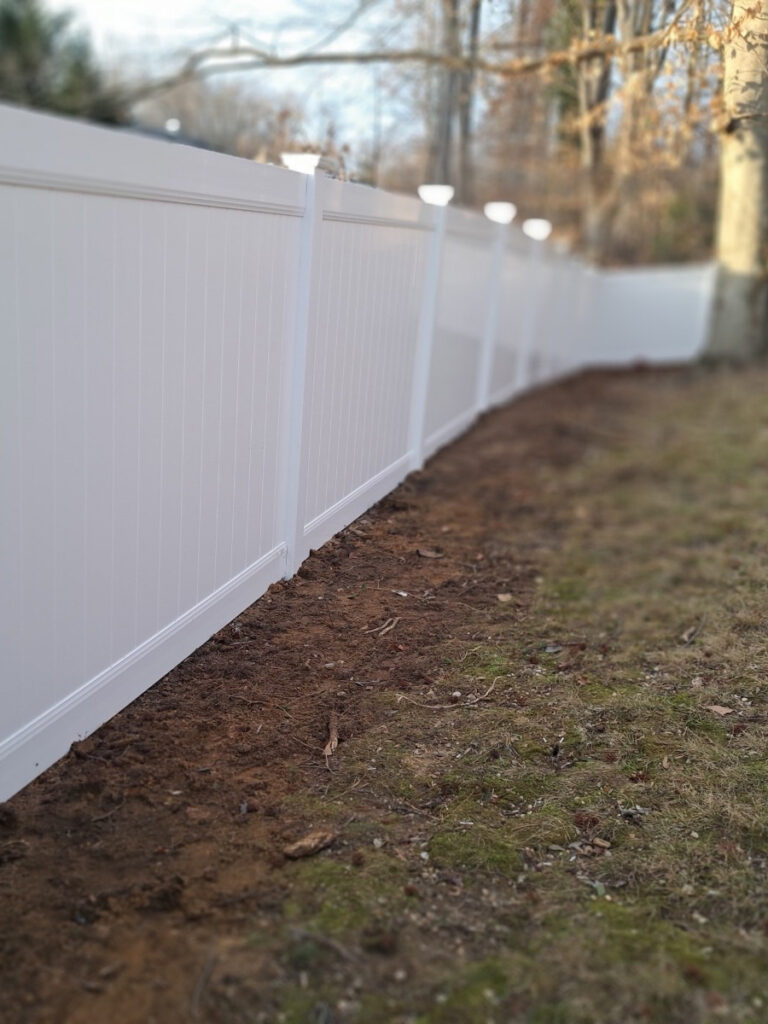
When Does a Fence Need Replacing?
Signs a repair would just be buying time:
- Widespread post failure. If many posts wobble, lean or are rotted or rusted at the ground line, the fence has lost its foundation.
- The same repair keeps coming back. If you have patched the same section two or three times, something about the original install (post depth, drainage, the wrong material for the spot) is not going to change with another patch.
- The material has broken down everywhere. Wood that is soft and splitting along the whole run, vinyl that has gone brittle and cracks when you touch it, or chain link with rust through the mesh and fittings are all signs of age, not damage.
- The fence no longer does its job. A 4 ft fence will not hold a dog that has learned to clear it, and an old picket fence will not meet the barrier rules for a new pool. When the use changes, replacement is often the real answer.
Before you replace, check whether your county or HOA requires approval for the new fence.
Repair or Replace? A Quick Decision Table
| What you see | Usually repair | Usually replace |
|---|---|---|
| One to a few broken boards, pickets or panels | Yes | |
| One or two leaning or rotted posts | Yes | |
| Many posts loose or rotted at the ground | Yes | |
| Gate sagging or not latching | Yes | |
| Storm damage to one section, rest of fence solid | Yes | |
| Storm damage along most of the fence line | Yes | |
| Material brittle, soft or rusted along the whole run | Yes | |
| Same section repaired several times already | Yes | |
| Style or color no longer available and match matters to you | Often | |
| Fence too short or wrong type for a new need (pool, dog, privacy) | Yes |
Treat the table as a starting point. An on-site look is the only way to see what is happening at the posts and below ground.
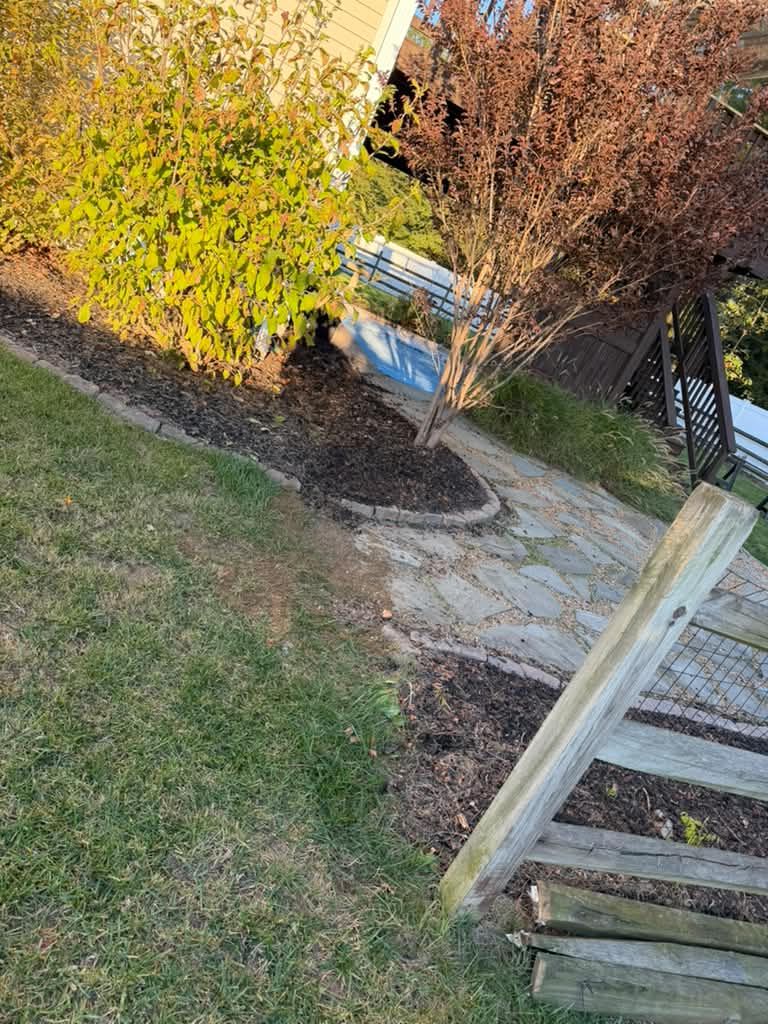
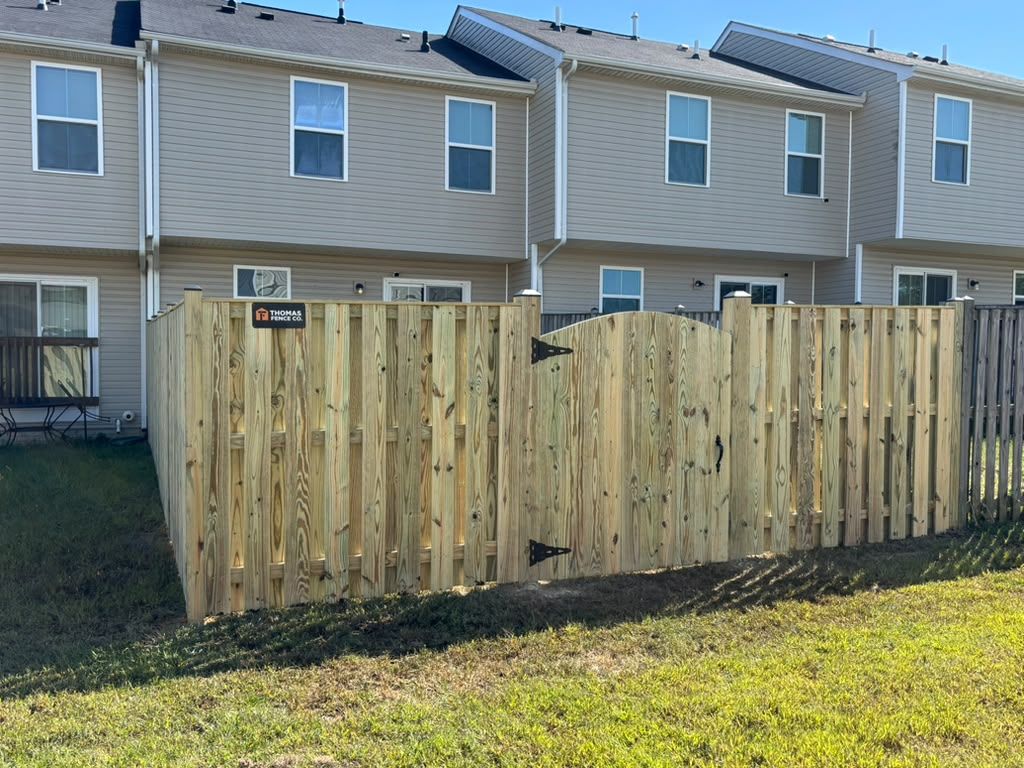
Before: an old leaning wood fence ready to be replaced. After: a new wood privacy fence we installed behind a row of townhouses.
What Should You Look For in a Wood Fence?
Wood is easy to repair because boards, rails and posts can be swapped one at a time.
Signs a wood fence can be repaired: – A few cracked, split or missing boards or pickets – One or two rails pulled loose from a post – A single post leaning after a storm or impact – Surface graying or mildew that cleans up with a wash
Signs it may be time to replace: – Posts soft or rotted at ground level along much of the fence (push a screwdriver into the post where it meets the soil; if it sinks in easily, the wood is going) – Boards cupping, warping and splitting across most of the run – Rails sagging between many posts – Insect damage in several sections
Wood posts usually fail first at the ground line, where water, soil and air meet. If you are replacing several anyway, ask about steel posts. Our older post on the durability of steel fence posts covers why some owners choose them. For more on wood styles, see our wood fence page and the guide to fence boards and pickets.
What About Vinyl Fences?
Vinyl does not rot, but it can crack, and panels can pop out of their rails in high wind or when something hits them.
Signs a vinyl fence can be repaired: – A panel or a few pickets cracked by impact (a mower, a falling limb, a ball) – Panels that slid out of the rails and are otherwise undamaged – A post cap missing or a single post leaning – Surface dirt or green growth that comes off with a cleaning
Signs it may be time to replace: – Cracking or chalky, brittle surfaces in many sections – Panels yellowed or faded unevenly enough that new parts will not blend in – Several posts leaning or loose in their footings – The style was discontinued and matching parts cannot be found
The big question with vinyl is matching, so have the brand and style name ready if you kept the paperwork. See our vinyl fence page for the styles we install.
How Do You Know If an Aluminum Fence Is Worth Fixing?
Aluminum fences are usually built in sections between posts, so a damaged section can often be replaced on its own.
Signs an aluminum fence can be repaired: – A bent picket or rail from an impact – One section knocked loose or out of line – A gate that drifts or does not latch – Small chips in the coating
Signs it may be time to replace: – Coating peeling, flaking or bubbling across much of the fence – Corrosion at many joints or post bases – Multiple posts out of plumb – The style or color is no longer made and the mismatch bothers you
Aluminum is a popular choice near salt water, and a well-kept aluminum fence can usually be repaired section by section for a long time. Learn more on our aluminum and iron fence page and the Jerith aluminum fence post.
When Should Chain Link Be Repaired or Replaced?
Chain link is the most forgiving fence to repair. Most of its parts (mesh, top rail, ties, tension bands, caps) are standard and easy to swap.
Signs a chain link fence can be repaired: – Mesh that has gone slack or been pushed out of shape – A bent top rail from a falling branch – Loose or missing ties, tension bands or caps – One post loose or leaning
Signs it may be time to replace: – Rust through the mesh across long stretches (surface staining alone is fine) – Many posts rusted at the base or loose in the ground – Mesh torn or cut in multiple places – You want privacy or a different look that chain link was never going to give you
Re-stretching sagging mesh is a common fix that brings an older chain link fence back into shape. See our chain link fence page for the options.
Can You Replace Just Posts, Panels or Gates?
Posts. A single post can usually be pulled and reset without taking down the whole fence. If it failed because of standing water or poor drainage, ask whether the new post should be set differently.
Panels and sections. Wood boards, vinyl panels and aluminum sections can generally be swapped one at a time. The main limits are matching (vinyl and aluminum styles change over time, and new wood will look brighter than weathered wood for a while) and whether the posts on each side are still solid.
Gates. Gates take more stress than any other part of a fence because they move every day. The usual causes of a sagging gate:
- The hinge post is leaning, so the whole gate tips with it
- Hinges or screws have loosened over time
- A wood gate has no diagonal brace, or the brace runs the wrong direction
- The gate is wider or heavier than the post and hinges were built for
Fixes range from tightening and adjusting hardware, to adding a brace or anti-sag kit, to resetting the hinge post. If the gate frame itself is twisted or rotted, a new gate is often the cleaner fix. Our gates page has more on gate options.
Thomas Fence Co lists fence maintenance and repair, and fence, gate and post replacement, among its services.
Storm Damage on the Coast: What Changes in Humid and Salty Areas?
Near the water in Myrtle Beach or along the Chesapeake and Potomac shoreline in Southern Maryland, humidity, salt air, sandy soil and strong storms all change the repair or replace math.
Salt and humidity speed up wear. Wood stays damp longer and tends to rot sooner at the ground line. Steel parts and fittings rust faster when salt air settles on them.
Sandy and wet soils loosen posts. Posts set in sandy soil or in spots that hold water can shift after heavy rain and wind. One leaning post after a storm is a repair. A whole run leaning the same way often points to a bigger footing problem.
Storms hit solid fences hardest. Solid privacy panels catch wind like a sail. Open styles like aluminum and chain link let more wind pass through. If a privacy fence has blown down more than once, it may be worth talking about a different style or post setup rather than repairing it the same way again. Our hurricane-resistant fencing guide goes into more detail.
After a storm, document first. Before anything is moved or cleaned up, take photos of the damage from a few angles, plus close-ups of broken posts and panels. Photos help with an insurance claim and help a contractor understand the job. Coverage depends on your policy, so check with your insurer.
Fixing small damage early saves the fence. In a coastal climate, a loose board or a broken panel left alone through a season of wind and rain tends to spread the damage to the boards and posts around it.
Is It Cheaper to Repair or Replace a Fence?
For limited damage, repair almost always costs less up front. But repeated repairs on a fence near the end of its life can add up to more than a replacement, and you still have an old fence.
A simple way to think about it:
- Get a price for the repair.
- Ask roughly how much life the rest of the fence has left.
- Get a price for replacement of the same section or the full run.
- Compare the cost per year of useful life rather than the bill today.
Our fence installation cost guide explains what drives the price of a new fence, and our financing page covers payment options if a replacement makes more sense for you.
What Happens When You Ask for a Repair Estimate?
A good estimate tells you what is wrong, why it happened and whether a repair will hold. It helps to have:
- Photos of the damaged area and the fence on either side of it
- The fence material and, if you know it, the brand and style
- Roughly how old the fence is
- What caused the damage, if you know (storm, tree, vehicle, age)
Questions worth asking any fence contractor:
- Is the problem the part that broke, or something underneath it like post depth or drainage?
- Can you match my existing material and color?
- If I repair now, what is likely to fail next?
- Do I need a permit or HOA approval for this work?
Thomas Fence Co has been building fences since 1976 and is licensed in Maryland under MHIC #135844. We work out of offices in Bushwood, MD (serving St. Mary’s County and Southern Maryland), Fuquay-Varina, NC (serving Raleigh and Wake County) and Myrtle Beach, SC. Find your local team on our Maryland, Raleigh area or Myrtle Beach pages, or contact your install team for an estimate.
FAQ
Can you replace just one fence post? Yes, in most cases. The attached boards, panels or mesh come off, the old post and footing are removed, a new post is set and the fence goes back up. If the post failed because of water or soil, ask whether the new one should be set differently.
Why is my gate sagging? The most common reasons are a leaning hinge post, loose hinges or screws, a missing or wrong-direction diagonal brace on a wood gate, or a gate that is too heavy for its post and hardware. Most can be fixed by adjusting hardware, adding a brace or resetting the hinge post.
Is it cheaper to repair or replace a fence? For damage limited to a few posts, panels or a gate, repair is usually cheaper. If the fence is old and failing in many places, repeated repairs can cost more over time than a replacement. Compare the repair price against how many years of life the rest of the fence has left.
Should I repair or replace my fence after a storm? If the storm damaged one section and the rest of the fence is solid, a repair usually makes sense. If posts are loose or broken along much of the fence line, or the fence has failed in storms before, replacement may be the better choice. Take photos before cleanup.
If the answer is replace and you live in a neighborhood with rules, read about getting HOA approval for a new fence first. For a sense of budget on a new privacy fence, see 6 foot privacy fence cost per foot.
Thomas Fence Co has offices in three states. Find the one nearest you on Google for directions, hours and reviews: Bushwood, MD, Fuquay-Varina, NC or Myrtle Beach, SC.