
Short answer: in St. Mary’s County most fences 7 feet or under don’t need a building permit, Charles County is similar but requires extra review in the Critical Area, and Calvert County’s Fence page says a building permit is required for fence construction generally. Rules also change if your lot touches the Chesapeake Bay Critical Area or sits near tidal water. Below we break down what each Southern Maryland county actually says, with links to the official pages so you can double-check before you dig a single post hole.
This article is general information, not legal advice. Rules change and vary by exact location, always confirm requirements with your county before starting a fence project.
Do You Need a Fence Permit in Southern Maryland?
It depends on your county, your fence height, and whether you’re in the Critical Area. Here’s a quick comparison based on each county’s official guidance:
| County | Building permit needed? | Critical Area | Height limits | Official source |
|---|---|---|---|---|
| St. Mary’s | Not required for fences not over 7 feet; an environmental permit is needed only if trees are removed | Environmental permit required only if trees are removed | Not specified in the sources we reviewed, fences are allowed “subject to applicable height restrictions” under the zoning ordinance | St. Mary’s County code amendments (PDF) |
| Charles | Not required in most instances under 7 ft; Critical Area properties need a Zoning Permit even under 7 ft; a building permit is needed over 7 ft (for footings) | Zoning Permit required for fences under 7 ft in the Critical Area | Front yard: 4 ft (up to 6 ft only where integral to the overall project design); rear/side yards: 8 ft; tennis courts: 12 ft; business/industrial/institutional security fences: 10 ft | Charles County Planning and Growth Management FAQ |
| Calvert | The county’s Fence page states fence construction requires a building permit | Critical Area Worksheet required | Per the county’s draft Zoning Ordinance Article 19 (a draft; check the adopted version): max 8 ft, but only 3 ft 6 in between the road and the front setback; decorative posts may exceed that by 9 inches | Calvert County Fence page |
St. Mary’s County Fence Rules
St. Mary’s County’s building code, as amended, exempts “fences not over 7 feet high” from needing a building permit (Chapter 203, Section 105.2 / R105.2). The county’s own Land Use & Growth Management (LUGM) FAQ backs this up, stating that “a permit is not normally required for the installation of a fence.” The one exception: if your property is in the Critical Area and you need to remove trees to install the fence, you’ll need an environmental permit first.
Good news if you’re worried about exact placement, St. Mary’s County zoning doesn’t require any setback from your property lines for fences (CZO Section 61.7.4.a). That said, the LUGM FAQ recommends having your property lines marked by a licensed surveyor and setting your fence a short distance inside the line. It’s not a legal requirement, but it can save you from a future dispute with a neighbor and makes maintenance on your side of the fence much easier.
If you’re putting in a swimming pool, know that specific fencing requirements apply to pool enclosures. See the county’s Customer Assistance Guide #5 for details.
The county’s current zoning ordinance allows fences in yards “subject to applicable height restrictions,” though we didn’t find a single published height number to quote here. See the Editor notes below. One wrinkle worth knowing about: in certain coastal flood hazard areas, the floodplain rules (Article 7, Chapter 76) restrict solid fences, privacy walls, and fences that could trap debris, unless they’re designed to fail safely under base flood conditions. If your lot is near the water, this is worth checking before you finalize a design.
If you’re in the Leonardtown area, our Leonardtown location page has more on the neighborhoods we serve.
Charles County Fence Rules
Charles County’s rule of thumb, per its Planning and Growth Management FAQ, is that most fences under 7 feet above finished grade don’t need a permit. There are two important exceptions:
- Critical Area properties need a Zoning Permit for a fence even if it’s under 7 feet.
- Fences over 7 feet need a building permit, because the taller fence’s support footings fall under building code review. (Fences 7’1″ and taller are listed among the residential permits required, per county code Section 297-27B.)
Pool fencing may also be required as part of a separate pool permit.
Charles County also sets specific height limits by yard, for single-family detached homes:
- Front yard: 4 feet maximum, with an exception up to 6 feet where the fence is an integral, consistent part of the overall project design.
- Rear and side yards: 8 feet maximum.
- Tennis court fences: up to 12 feet.
- Business, industrial, or institutional security fences: up to 10 feet.
Design, materials, and color have to follow any applicable HOA requirements. If your home is in a Planned Unit Development (PUD) or in “St. Charles” zoned property, the county requires an HOA or Planning Design Review Board (PDRB) approval letter to be in your permit file before zoning will approve the permit, so budget time for that step if it applies to you.
Applications in Charles County go through the county’s electronic Citizens Self Service Portal.
We work in both the Waldorf and La Plata areas, see our Waldorf and La Plata location pages for more.
Calvert County Fence Rules
Calvert County’s own Fence page is direct: “Fence construction requires a Building permit.” There’s a $25 application fee due at submittal, with any additional permit fees due after plan review and before the permit is issued.
If your property is in the Critical Area, you’ll also need to complete a Critical Area Worksheet. Calvert defines the Critical Area as all land within 1,000 feet of the mean high water line of tidal waters, or the landward edge of tidal wetlands, so a lot doesn’t have to be waterfront to qualify, just close enough.
A few other approvals can come into play depending on where your lot sits:
- Town Center or Rural Commercial zones require Architectural Review.
- Designated historic districts require a Historic Area Work Permit.
- POA/HOA communities may require association approval.
- Chesapeake Beach and North Beach town limits require a Beach Application Approval.
- Agricultural Preservation District properties may need APAB approval.
If you hire someone to build your fence rather than doing it yourself, Calvert County requires that contractor to be a licensed contractor. You can verify a license through the MHIC search.
Calvert’s draft Zoning Ordinance Article 19 (a 2024 revision: flagged below to double-check against the current adopted version) adds more detail: fences over 7 feet, and all fences in the Critical Area, need a building permit. Fences may sit directly on a lot line, but they’re not allowed in utility or drainage easements, or across access easements. The general height cap is 8 feet, dropping to 3 feet 6 inches between the road and the front setback, though decorative posts can exceed the limit by up to 9 inches. Fences also aren’t allowed in Natural Resource Protection Areas or Forest Retention Areas.
If you’re in Calvert County, see our Calvert County fence page.
What If Your Lot Is in the Chesapeake Bay Critical Area or on the Water?
All three counties treat the Maryland Chesapeake Bay Critical Area as a separate layer of review on top of normal zoning. According to the Maryland DNR Critical Area FAQ, the “Buffer” is the strip of land next to tidal waters, tidal wetlands, and tributary streams: at minimum 100 feet wide, and often wider where there are steep slopes, wetlands, or certain soil types.
Inside the Buffer, construction, land disturbance, and clearing trees or brush are generally prohibited. New structures, which would include a fence, generally have to be located outside the Buffer unless you obtain a variance. Even cutting natural vegetation inside the Buffer requires an approved Buffer Management Plan.
in 2022, the Calvert County Board of Appeals issued an order granting a Critical Area variance for a fence over 4 feet inside the Critical Area Buffer in Lusby. That case shows that fences in the Buffer can require a formal variance process, not just a standard permit.
If you’re not sure whether your lot includes Buffer area, your county’s planning office can help you locate the Buffer line before you plan your fence layout.
HOA Approval vs. County Permit: Which Do You Need?
These are two separate approvals, and you may need both. A county permit (or permit exemption) covers code and zoning compliance: height, setbacks, and construction standards. An HOA or community association approval covers things like design, material, and color, and is enforced through your neighborhood’s own governing documents, not the county.
Charles County actually ties the two together for certain properties: if you’re in a Planned Unit Development or on “St. Charles” zoned property, the county requires your HOA/PDRB approval letter to be in your permit file before zoning sign-off. Calvert County similarly notes that POA/HOA approval may be required depending on your community. We don’t have specific sourced guidance on HOA requirements for St. Mary’s County fence projects.
In short: check your HOA or community covenants in addition to county rules, regardless of which county you’re in.
Who Pulls the Permit, You or Your Fence Contractor?
This varies by project and by county process. What we do know for certain: Calvert County requires that if you hire someone to build your fence, that person must be a licensed contractor (verifiable through MHIC search).
Practice varies by contractor and by job, so ask whoever you hire to put in writing who will file the permit and any Critical Area paperwork before work is scheduled.
How Thomas Fence Co Helps With Permits
Thomas Fence Co has built fences in Southern Maryland since 1976 and is licensed in Maryland under MHIC #135844. When you request an estimate, ask us what your county will need for your lot, including whether it sits in the Critical Area, and we will talk through the steps for your address before anything is ordered.
We work across Southern Maryland. See our county pages for St. Mary’s County, Charles County, and Calvert County, or our full Maryland service area.
FAQ
Do I need a permit for a 6-foot fence in St. Mary’s County?
Generally no. St. Mary’s County’s building code amendment exempts fences 7 feet or under from needing a building permit, and the county’s LUGM FAQ states a permit is “not normally required” for fence installation. An environmental permit is only needed if you must remove trees in the Critical Area to install the fence. Confirm with St. Mary’s County LUGM for your specific lot.
How long does a fence permit take in Charles County?
It varies. We don’t have a verified processing timeline for Charles County fence permits, so check directly with Charles County Planning and Growth Management for current timing before you schedule your project.
Can I put a fence in the Critical Area?
Often yes, outside the Buffer, though you may need extra review: for example, Charles County requires a Zoning Permit for Critical Area fences even under 7 feet, and Calvert County requires a Critical Area Worksheet. Inside the Buffer itself (generally at least 100 feet from tidal water, tidal wetlands, or tributary streams), new structures including fences are generally not allowed unless you get a variance, as happened in a 2022 Calvert County Board of Appeals case in Lusby. Check with your county’s planning office to find the Buffer line on your lot.
Who pulls the permit, me or the contractor?
It depends on the county’s process and the specific project. Calvert County specifically requires that if you hire someone to build your fence, they must be a licensed contractor (searchable through MHIC). Ask your contractor up front who will file it.
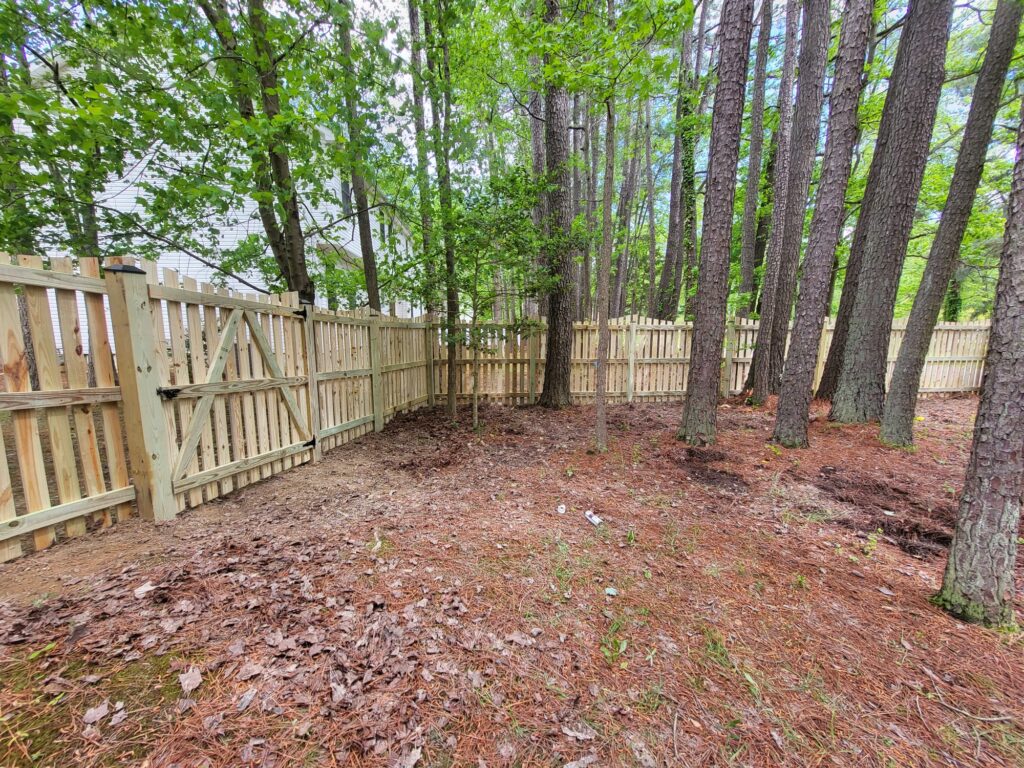
Once you know the county rules, popular fence styles in St. Mary's County can help you narrow down a look. For a pool, also read our guide to pool fence requirements in MD, NC and SC.
Our nearest office for Maryland and Virginia is in Bushwood, MD. You can find Thomas Fence Co in Bushwood on Google for directions, hours and reviews.