
Most residential fences last somewhere between 10 and 50 years. Aluminum usually lasts the longest, often 30 years or more. Vinyl typically gets 20 to 30 years. Chain link runs about 15 to 30 years depending on the coating. Wood has the widest range, roughly 10 to 25 years, because so much depends on the type of wood, how the posts were set and how well the fence is looked after.
Those are typical ranges, not promises. Climate, soil, installation and upkeep move a fence toward the short or long end. Below is what to expect from each material and how to get more years out of it.
Key takeaways
- Most residential fences last between 10 and 50 years, depending on the material, the installation and the upkeep.
- Powder-coated aluminum usually lasts longest, often 30 to 50 years. Vinyl typically gets 20 to 30 years.
- Wood fences usually fail first at the posts, right at the ground line, where the wood stays damp.
- Humidity, salt air, storms and soil in Maryland and the Carolinas can push a fence toward the short end of its range.
- Setting posts well, keeping soil off the bottom and fixing small problems early all add years.
Fence Lifespan at a Glance
| Material | Typical lifespan | Upkeep |
|---|---|---|
| Pressure-treated pine | About 10 to 20 years | Clean and seal or stain every few years |
| Cedar | About 15 to 30 years | Clean and seal every few years |
| Vinyl (PVC) | About 20 to 30 years | Wash once or twice a year |
| Aluminum (powder-coated) | About 30 to 50 years | Rinse now and then, check gate hardware |
| Galvanized chain link | About 15 to 25 years | Check ties, tension and posts once a year |
| Vinyl-coated chain link | About 20 to 30 years | Same as galvanized |
These ranges reflect what fence industry guides commonly report. The manufacturer’s warranty for the exact product you choose is the best single guide, so ask for the warranty sheet before you buy.
How Long Does a Wood Fence Last?
A pressure-treated pine fence usually lasts 10 to 20 years, and cedar often lasts 15 to 30. The boards are rarely what fails first. It is usually the posts, right at the ground line, where wood stays damp.
The good news is that properly treated posts can last a long time. The USDA Forest Products Laboratory has tested treated pine posts in the ground in southern Mississippi, one of the toughest decay and termite sites in the country, for more than 50 years. Posts treated to standard ground-contact levels with industrial preservatives were still standing decades later, while untreated pine posts at the same site lasted about two years (USDA Forest Service research). Older USDA guidance for homeowners put pine posts pressure-treated for ground contact at 30 to 40 years anywhere in the US (USDA FPL, Protecting Wood Fences for Yard and Garden).
For homeowners, that research points to two things:
- Check the end tag. Fence posts should be treated for ground contact. The USDA’s current guide says posts rated UC4A are acceptable for most residential fences, and UC4B is worth considering where decay risk is high (USDA FPL guidelines for pressure-treated wood).
- Water is the enemy above ground too. The USDA notes that decay in above-ground fence parts is greatest in the South Atlantic and Gulf Coast states, and that rot starts where water gets trapped: rail ends, board bottoms touching soil, and joints over posts.
If you want wood, our wood and privacy fence guide covers styles, and fence boards and pickets explains board choices.
How Long Does a Vinyl Fence Last?
A quality vinyl fence typically lasts 20 to 30 years. Vinyl does not rot and termites leave it alone, which removes the two biggest reasons wood fences fail. What wears vinyl down is sunlight and impact. Cheaper, thin-wall vinyl without good UV protection can fade, chalk or turn brittle sooner, and any vinyl can crack if it is hit hard in cold weather.
To get the full life out of vinyl:
- Choose a product with UV inhibitors and a clear manufacturer warranty.
- Wash it with mild soap and water to keep mildew off, especially on shaded sides.
- Keep sprinklers, mowers and string trimmers from hitting the bottom rail and posts.
For more on the material, see advantages of vinyl fence and 5 reasons homeowners choose vinyl fencing.
How Long Does an Aluminum Fence Last?
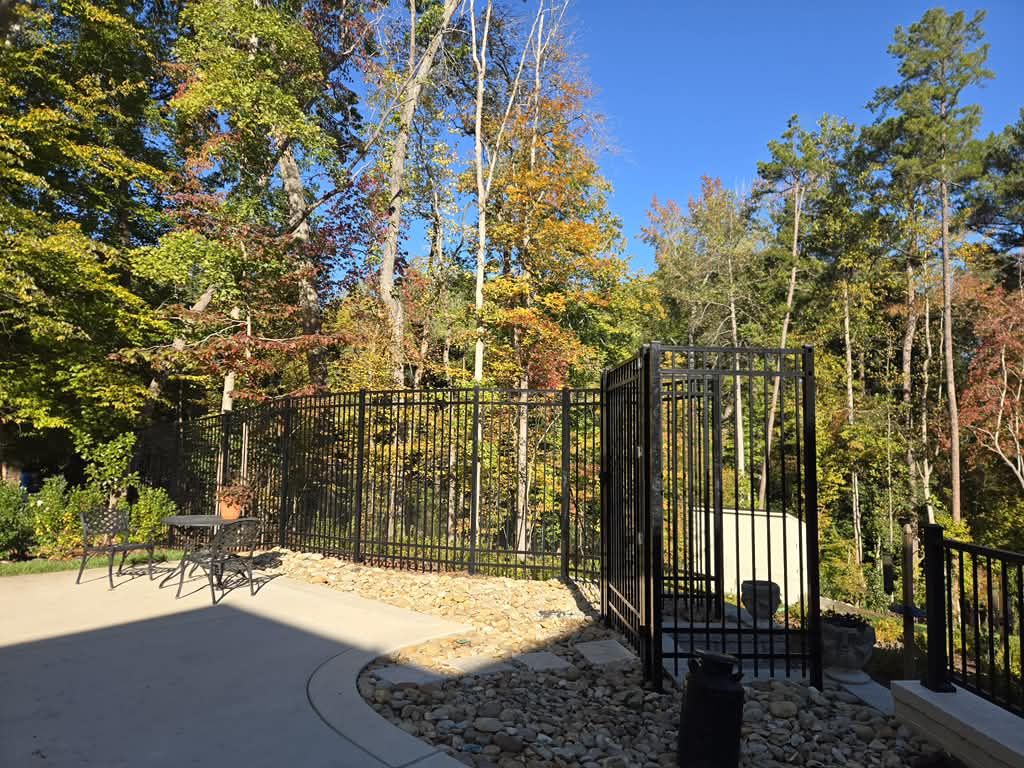
Powder-coated aluminum is usually the longest-lasting common residential fence, with industry guides putting it at 30 to 50 years or more. Aluminum does not rust the way steel does, and a good powder coat protects the finish. The parts that need attention are the moving ones: hinges, latches and self-closing gate hardware, especially on a pool fence.
Aluminum is a strong choice near the coast. Our salt air guide explains why, and our Jerith aluminum fence post looks at one well-known brand.
How Long Does a Chain Link Fence Last?
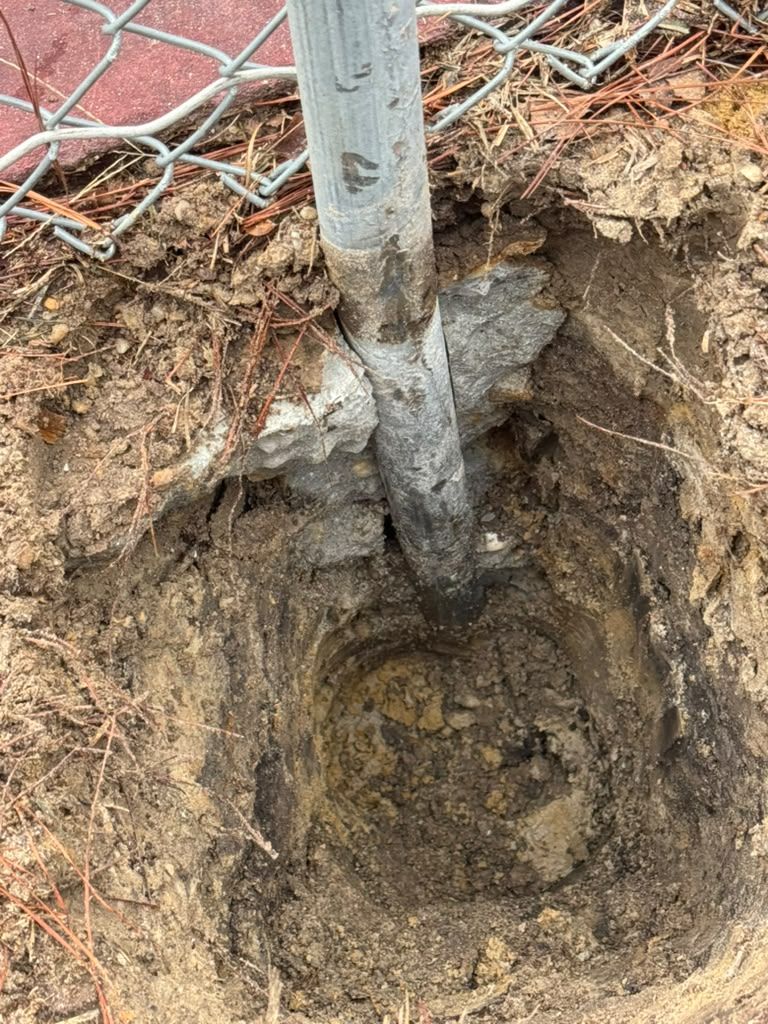
Galvanized chain link typically lasts 15 to 25 years, and vinyl-coated chain link often lasts longer because the coating adds another layer between the steel and the weather. Rust usually starts at cut ends, ties and fittings, and at the bottom of the fabric where it touches soil or mulch. Heavier gauge fabric and posts hold up better over time. Our post on steel fence posts in Southern Maryland goes into posts in more detail.
What Shortens a Fence’s Life in Maryland and the Carolinas?
Where you live matters. The same fence can age very differently in St. Mary’s County, Wake County and Horry County.
- Humidity and rain. Long, wet summers keep wood damp and feed mildew on vinyl. Good drainage around posts helps every material.
- Salt air. Near the coast, salt speeds up corrosion on steel, fasteners and hardware. Coastal homeowners in the Myrtle Beach area should pay extra attention to hardware and coatings.
- Storms and wind. A fence that is set too shallow or has weak posts can fail long before the material wears out. Our guide to hurricane-resistant fencing covers what holds up best.
- Soil. Clay that stays wet, sandy soil that shifts, and freeze-thaw cycles further north all work on posts over time.
- Vegetation. Vines, shrubs and mulch piled against a fence hold moisture and hide early damage.
How long does a fence last in Raleigh and Fuquay-Varina?
Around Raleigh and Fuquay-Varina, posts sitting in wet clay, summer storms, and sun shorten a fence’s life the most. Vinyl and aluminum usually outlast wood here because they do not rot. Post depth and drainage matter more than the board you pick.
| Material | What wears it out in Wake County | What helps |
|---|---|---|
| Pressure-treated pine | Rot at the post base in wet clay, warping in sun | Ground-contact-rated posts, gravel at the base, stain every few years |
| Cedar | Same, slower | Same |
| Vinyl | Sun fading, wind loads on solid panels | UV-inhibited panels, steel-reinforced gate posts |
| Aluminum | Very little; coating scratches | Touch up scratches |
| Chain link | Rust where the coating breaks | Coated (black or green) mesh |
Nearest office: Thomas Fence Co, 1206 N Broad St, Fuquay-Varina, NC 27526, (919) 725-7746.
How long does a fence last in Myrtle Beach and Horry County?
Near the coast, salt air, humidity, sandy soil, and hurricane wind wear fences out faster than inland. Vinyl and powder-coated aluminum usually last longest around Myrtle Beach because they do not rot or rust easily. Oceanfront and marsh-front homes see the most wear.
| Material | What wears it out on the Grand Strand | What helps |
|---|---|---|
| Wood | Rot, mildew, posts loosening in sand | Ground-contact posts, sealing, deeper posts |
| Vinyl | Wind loads on solid panels | Reinforced posts, semi-privacy styles let wind through |
| Aluminum | Very little if powder coated | Rinse salt off a few times a year |
| Chain link | Rust where coating breaks | Vinyl-coated mesh |
| Any metal hardware | Salt corrosion | Stainless or coated hinges and latches |
See our guides to the best fence for salt air and hurricane-resistant fencing for more.
Nearest office: Thomas Fence Co, 1355 Dividend Loop, Myrtle Beach, SC 29577, (910) 558-0956.
Signs Your Fence Is Near the End
- Many posts lean, wobble or are soft or rusted at the ground line.
- Wood boards are soft, splitting or rotting along most of the run.
- Vinyl has gone brittle, cracks easily or has faded badly.
- Chain link fabric or fittings are rusted through in many places.
- You keep repairing the same sections.
If only one area is damaged, a repair may be all you need. Our fence repair vs replacement guide walks through how to decide.
How to Make Your Fence Last Longer
- Start with the posts. Use the right post for the material, set at the right depth, with good drainage at the base.
- Keep soil and mulch off the bottom. Leave a small gap between wood boards and the ground.
- Wash and inspect once a year. Look for loose fasteners, sagging gates and early rust.
- Seal or stain wood on a schedule. Wood that is kept sealed holds up better in wet climates.
- Fix small problems early. One loose post or a dragging gate puts extra strain on the rest of the fence.
If you are still choosing a material, our fence materials guide and comparison of fencing materials put cost, upkeep and lifespan side by side.
Frequently Asked Questions
What type of fence lasts the longest?
Among common residential fences, powder-coated aluminum usually lasts the longest, often 30 to 50 years or more. Vinyl and vinyl-coated chain link come next, then cedar and pressure-treated wood.
How long does a vinyl fence last?
A quality vinyl fence typically lasts 20 to 30 years. Thin-wall vinyl without good UV protection may fade or turn brittle sooner.
How long does a pressure-treated wood fence last?
Usually about 10 to 20 years for the fence as a whole. Posts treated for ground contact can last much longer, but boards, rails and fasteners wear out sooner, especially in humid areas.
When should I replace my fence instead of repairing it?
When problems run along most of the fence, many posts are failing, or you keep repairing the same sections. If the damage is in one area and most posts are firm, a repair is usually enough.
Thomas Fence Co has offices in three states. Find the one nearest you on Google for directions, hours and reviews: Bushwood, MD, Fuquay-Varina, NC or Myrtle Beach, SC.