
If you live in an HOA or planned community, you typically need two approvals before you dig a single post hole: approval from your homeowners association (sometimes called architectural review or ARC approval) and a separate permit from your city or county. Start by reading your covenants, then submit a complete package (survey, product specs, height, color, and contractor info) to avoid delays.
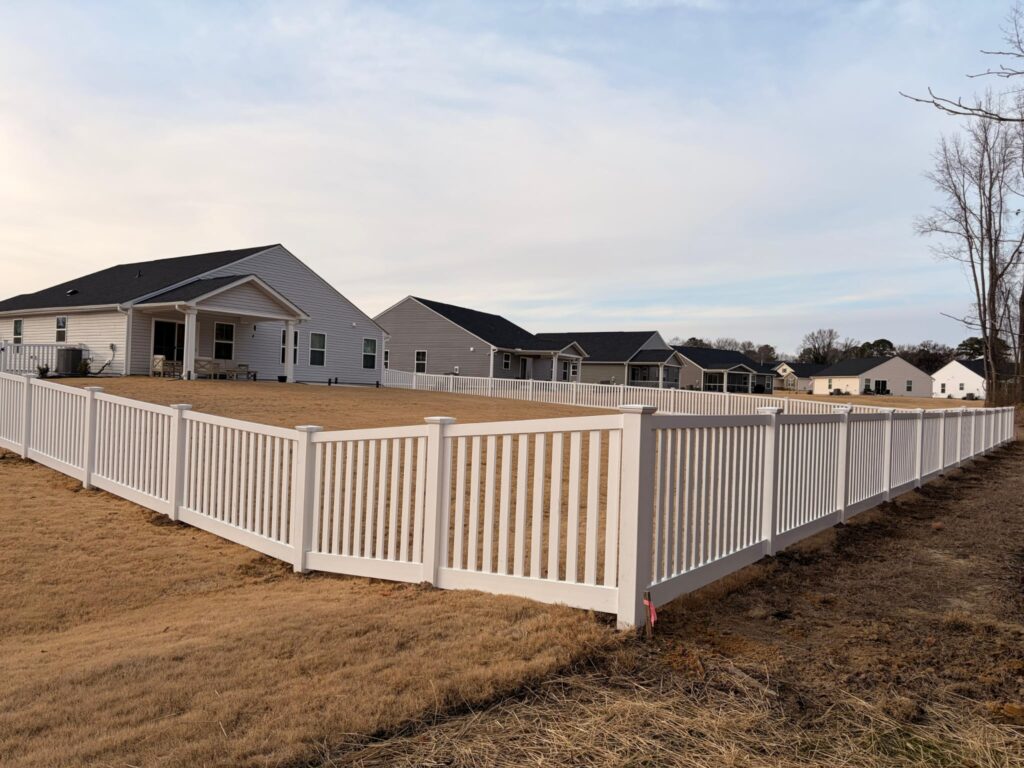
Read Your Covenants First: What Are You Actually Looking For?
Before you call a contractor or an HOA board member, pull your community’s governing documents: the Declaration of Covenants, Conditions & Restrictions (CC&Rs), the architectural guidelines or design standards, and any fence-specific rules. Look for:
- Allowed materials (wood, vinyl, aluminum, chain link, ornamental; some HOAs restrict certain materials entirely)
- Maximum height, usually different for front yards vs. backyards
- Approved colors or finishes
- Setback requirements from property lines, sidewalks, or easements
- Whether a specific style (picket, privacy, split rail) is required or banned
- The actual application process: who reviews it, and what form they use
Rules vary a lot by association, even within the same county, so don’t assume your neighbor’s approved fence means yours will sail through too.
What to Submit for HOA Fence Approval
Most architectural review committees ask for a fairly standard packet. Having everything ready the first time is the single biggest thing you can do to avoid a resubmission. A typical HOA fence application includes:
- A plat or property survey showing the proposed fence line relative to property boundaries, easements, and setbacks
- Style and height: a drawing or photo of the proposed fence style with the exact height noted
- Color and material: wood, vinyl, aluminum, chain link, or ornamental, plus any finish or stain color
- A manufacturer spec sheet for the product, if the HOA requires documentation of materials
- Contractor information: company name, license number, and sometimes proof of insurance
- A simple site sketch or plot plan showing where the fence sits relative to the house, neighboring lots, and any shared common areas
Submit this as one complete packet rather than piecemeal. Incomplete applications are one of the most common reasons architectural review committees ask for a resubmission.
How Long Does HOA Fence Approval Take?
This varies by association. Some boards meet monthly, some have a standing architectural review committee that turns requests around faster, and some communities handle approvals entirely by mail or email between meetings. There’s no single standard timeline across HOAs, so ask your HOA management company or board directly what their current review cycle looks like, and plan your project timeline around their answer rather than assuming a fixed number of days or weeks.
HOA Approval vs. City or County Permit: Do You Need Both?
Almost always, yes. These are two separate processes run by two different authorities, and getting one does not automatically get you the other:
- HOA / architectural review approval governs whether the fence fits the community’s private covenants: style, color, material, height, placement relative to common areas.
- City or county permit governs code compliance: things like height limits in certain zones, placement relative to utility easements or rights-of-way, and local building code.
In Southern Maryland (St. Mary’s, Charles, and Calvert counties), the Fredericksburg, VA area (Stafford and Spotsylvania counties), Wake County / Fuquay-Varina, NC, and Myrtle Beach / Horry County, SC, permit requirements differ by jurisdiction, and some smaller municipalities don’t require a permit for certain fence types at all. Check with your local permitting office in addition to your HOA, don’t assume one approval covers the other.
What Can You Do If Your HOA Denies Your Fence Request?
If your application is denied or sent back, start with the specifics:
- Ask for the denial in writing, with the specific covenant or guideline cited.
- Compare it against your governing documents to see whether the rule is clearly stated or open to interpretation.
- Ask about an appeals process. Many associations have a formal process for appealing an ARC decision to the full board.
- Consider a modified resubmission: sometimes a different material, color, or height brings a design back into compliance.
- Request a variance, if your HOA’s documents allow for one, especially for unusual lot shapes or existing conditions.
If you believe the denial is inconsistent with your community’s recorded documents, or you’re not getting a clear answer, that’s a point where many homeowners choose to consult an attorney familiar with HOA law in their state. This article is not legal advice, and HOA dispute outcomes depend heavily on your specific governing documents and state law.
Do You Need Approval to Replace an Existing Fence?
In most HOAs, yes. Even a straight swap of an old fence for a new one in the same location is typically treated as new construction for approval purposes, especially if the material, color, height, or style is changing at all. Some associations have a simplified process for like-for-like replacements, but that’s determined association by association, not a universal rule. Check your covenants or ask your HOA management company before assuming a replacement is exempt.
What Happens If You Build Without Approval?
Consequences vary by association, but commonly include a formal violation notice, fines (which can sometimes be assessed per day until the issue is resolved), and in some cases a requirement to modify or remove the fence entirely at the homeowner’s expense. Some associations can also place a lien tied to unpaid fines, depending on their governing documents and applicable state law. Because enforcement powers and procedures differ by state and by association, it’s worth getting approval in writing before installation rather than finding out after the fact what your specific HOA is authorized to do.
How Thomas Fence Co Helps with HOA Paperwork
Thomas Fence Co has been a family-owned business since 1976, serving Southern Maryland, the Fredericksburg, VA area, Raleigh/Wake County and Fuquay-Varina, NC, and Myrtle Beach/Horry County, SC. We work in wood, vinyl, aluminum, chain link, and ornamental fencing, and we’re licensed in Maryland under MHIC #135844.
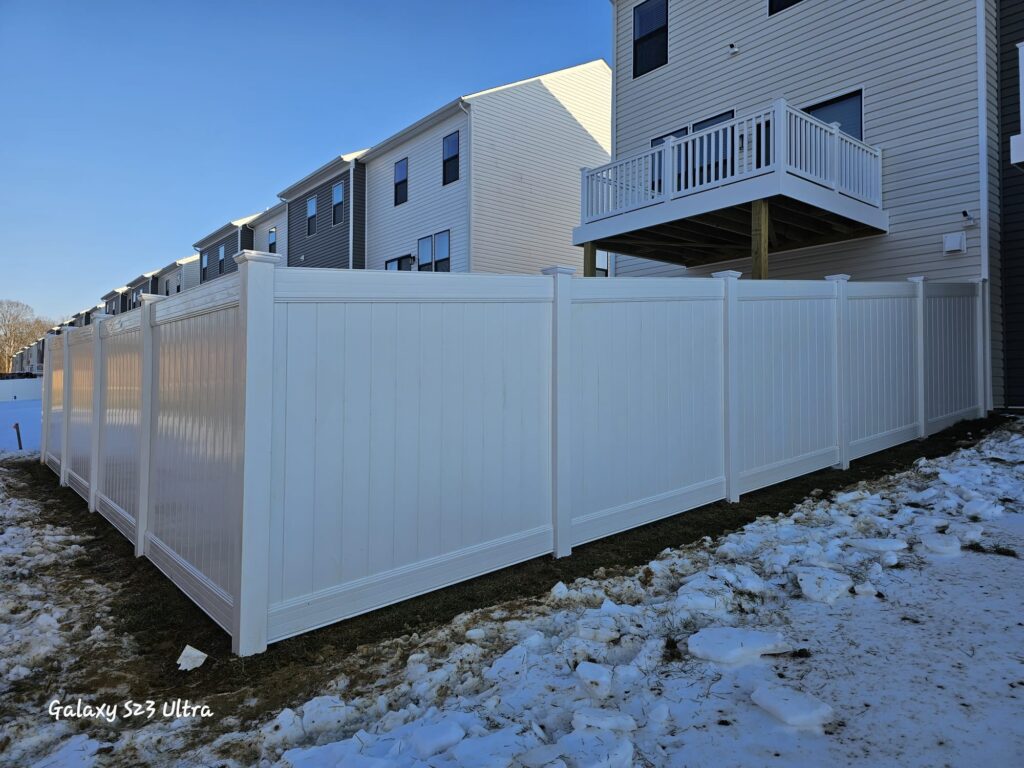
Every project starts with a free on-site consultation and a detailed written estimate, which gives you the material, style, height and layout details most HOA applications ask for. If your HOA wants something specific, such as product spec sheets, tell us when you request your estimate.
For qualified buyers, we also offer financing through Wells Fargo, including 0% for 12 months, which can be worth factoring in while you’re waiting on HOA and permit approvals.
State Law Context (Not Legal Advice)
Each of our markets has a state law that governs how HOAs operate and disclose their governing documents. These laws generally address things like recordkeeping, meeting notices, and disclosure of documents. They don’t set a specific timeline for architectural review decisions or guarantee a specific outcome for a fence request. If you have a dispute with your HOA, read the statute and your community’s own documents, and consider talking to a local attorney.
- Maryland: Maryland Homeowners Association Act, Real Property Code Title 11B. Official text: Maryland General Assembly, Real Property §11B
- Virginia: Property Owners’ Association Act, Code of Virginia §§ 55.1-1800 et seq. Official text: Virginia Law, Title 55.1, Chapter 18
- North Carolina: North Carolina Planned Community Act, G.S. Chapter 47F. Official text: NC General Assembly, Chapter 47F
- South Carolina: Homeowners Association Act, S.C. Code Title 27, Chapter 30. Official text: South Carolina Legislature, Title 27, Chapter 30
This section is a general description of what these statutes cover, not a summary of your rights or a guarantee of how your HOA will apply them. This is not legal advice. Check the statute text directly and talk to a licensed attorney in your state for anything specific to your situation.
Printable HOA Fence Approval Checklist
Copy this list and check items off as you prepare your submission:
- Read current CC&Rs and architectural guidelines in full
- Confirm allowed materials and styles for your lot
- Confirm maximum height (front yard and backyard, if different)
- Confirm approved colors/finishes
- Pull your property survey or plat
- Mark proposed fence line and setbacks on the survey
- Get a material/product spec sheet from your contractor
- Confirm contractor name, license number, and insurance info
- Complete the HOA’s official architectural request form
- Submit the full packet as one complete application
- Ask the HOA for expected review timing for your specific submission
- Separately confirm whether your city/county requires its own permit
- Get final HOA approval in writing before installation begins
- Keep a copy of the approval and permit on file for future reference (e.g., if you sell the home)
FAQ
Can an HOA stop me from building a fence? Yes. Most HOAs have the authority, through their recorded covenants and architectural guidelines, to approve, deny, or require changes to a fence request. The specific rules and review process are spelled out in your community’s governing documents, so what an HOA can and can’t restrict varies by association. If you think a denial is inconsistent with your documents, ask about the appeals process described in your covenants.
Do I need HOA approval to replace an existing fence? In most HOAs, yes. Replacing a fence is typically treated as new construction for approval purposes, even if you’re using the same footprint. Some associations allow a simplified process for exact like-for-like replacements, but that depends on the individual HOA’s rules. Check your covenants or ask your HOA management company before starting work.
What happens if I build without approval? Consequences vary by association but commonly include a violation notice, fines, and in some cases a requirement to modify or remove the fence at your own expense. Some HOAs can also place a lien tied to unpaid fines, depending on their governing documents and state law. It’s worth getting written approval before installation rather than finding out afterward what your HOA is authorized to require.
How long does HOA fence approval take? Timing varies by association. Some boards review requests monthly, others handle them between meetings or by email. There’s no universal standard across HOAs, so ask your specific HOA or management company what their current review cycle looks like before you schedule installation.
Most HOAs want to see the material and height up front, so a side by side fencing materials comparison is a good place to start. Your town may also need its own permit, so check fence permits and height rules in Raleigh and Wake County too.
Thomas Fence Co has offices in three states. Find the one nearest you on Google for directions, hours and reviews: Bushwood, MD, Fuquay-Varina, NC or Myrtle Beach, SC.