
For homes near the coast, vinyl and powder-coated aluminum generally hold up better against salt air than wood or untreated metal, since they resist moisture and rust. The best choice still depends on your style preference and how much upkeep you want to handle. Thomas Fence Co installs and repairs all of these materials across coastal Carolina.

If you’re comparing options for a beach house or a yard just a few blocks from the water, it helps to understand what salt air actually does to a fence before you pick a material.
What Does Salt Air Do to a Fence?
Salt air carries fine salt particles that settle on every outdoor surface, including fences. Over time, that salt can speed up corrosion on metal parts, draw moisture into porous materials like wood, and wear down certain finishes faster than they’d wear inland.
The effect is usually most noticeable on hardware first. Hinges, screws, and latches tend to show rust or corrosion before the main fence panels or posts do, simply because fasteners are smaller and often made from less corrosion-resistant metal. Wind-driven salt spray, humidity, and frequent rain all combine to make coastal conditions harder on a fence than a typical inland yard.
None of this means a fence can’t last near the water. It just means material choice and basic upkeep matter more close to the coast than they do elsewhere.
Is Vinyl a Good Fence Near the Ocean?
Vinyl is one of the more forgiving choices for a vinyl fence near ocean exposure. Because it’s a solid plastic material, there’s no metal to corrode and nothing for salt to react with chemically. Vinyl also doesn’t absorb moisture the way wood does, so it isn’t prone to the swelling or rot that humid, salty air can encourage in untreated wood.
Routine care is also simple. A rinse with a hose removes surface salt and grime, and the color is part of the material itself rather than a coating that can wear through. Many homeowners along the coast choose vinyl specifically because it needs less attention than other materials while still giving a clean, finished look. You can see the options Thomas Fence Co offers on our vinyl fence page.
Does Aluminum Fence Rust Near the Ocean?
Aluminum doesn’t rust the way steel or iron does, which is why it’s a popular choice for coastal properties. But that doesn’t mean aluminum is immune to the effects of salt air. Raw or exposed aluminum can still oxidize or pit over time, particularly at cut edges, weld points, or anywhere the surface gets scratched down to bare metal.
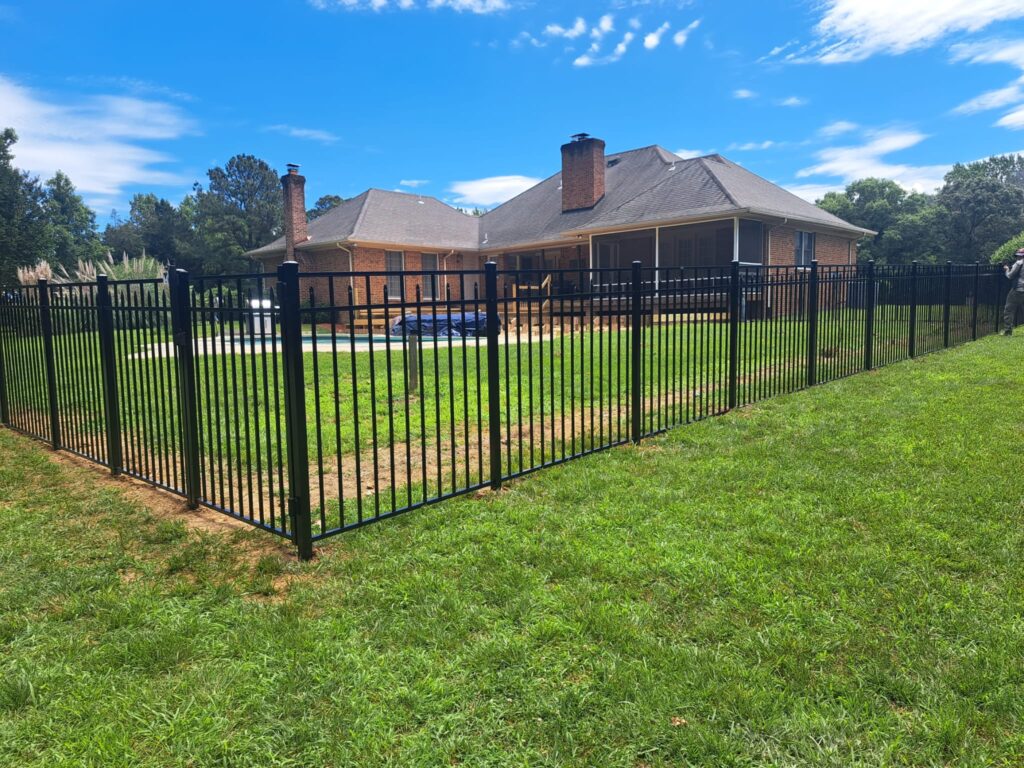
This is where the finish matters. Powder-coated aluminum adds a protective layer over the metal that helps it resist the kind of aluminum fence salt air corrosion that can affect unfinished or poorly coated products. Keeping that coating intact, by avoiding deep scratches and touching up any chips promptly, goes a long way toward keeping an aluminum fence looking good near the water.
Jerith is one of the aluminum fence lines Thomas Fence Co installs, and it’s a common choice for homeowners who want an open, ornamental look without the upkeep that wood requires. You can learn more on our Jerith aluminum fence page.
Can a Wood Fence Work at the Beach?
A wood fence can work near the coast, but it generally asks more of the homeowner than vinyl or aluminum does. Wood is naturally porous, so humidity and salt-laden air can be absorbed into the grain over time. Left unprotected, this can contribute to warping, graying, or loosened fasteners faster than you’d see with the same fence set back from the water.
Choosing a wood species that’s naturally more resistant to rot and insects, having it properly treated, and applying a quality sealant or stain can all help a wood fence handle coastal conditions better. Because every yard’s exposure is different, it’s worth talking through species and finish options with your installer rather than assuming any one type of wood will perform the same everywhere. For more on the styles available, visit our wood fence page.
Which Hardware and Fasteners Should a Coastal Fence Use?
Hardware is often the first part of a fence to show wear in salty air, so the type of fasteners used matters. In general, stainless steel hardware resists corrosion better than standard galvanized hardware in humid, salty conditions, since the galvanized coating on steel can wear thin over time and expose the metal underneath to rust.
Galvanized fasteners are still widely used and can perform well, especially with a thicker or higher-quality coating, but they typically need more attention near the coast than stainless steel does. If you’re unsure which hardware makes sense for your fence and your specific location, it’s a good question to raise with your installer before work begins.
How Should You Maintain a Fence Near the Coast?
Fences near the water generally benefit from a bit more attention than those further inland, but the routine doesn’t have to be complicated. As a general practice, periodically rinsing the fence with fresh water helps remove built-up salt before it has a chance to sit on the surface for long stretches. Walking the fence line now and then to check hardware, hinges, posts, and any spots where the finish looks worn or scratched can help you catch small issues before they spread.
Trimming back plants or landscaping that stay damp against the fence also helps, since trapped moisture combined with salt air tends to accelerate wear in those spots. None of this needs to be an exact schedule, just a habit of keeping an eye on the fence the way you might check other exterior parts of your home.
Chain Link at the Coast
Chain link can still be a practical option near the water, particularly when it’s vinyl-coated. The vinyl coating sits over the galvanized wire and adds a layer of protection against salt exposure that bare galvanized chain link doesn’t have. It’s a reasonable fit for utility areas, dog runs, or situations where an open, simple fence line is the priority rather than a decorative look. See our chain link fence page for more on what’s available.
Comparing Fence Materials for Salt Air
| Material | Salt-Air Resistance | Upkeep | Best For |
|---|---|---|---|
| Vinyl | High | Low | Low-maintenance coastal yards, pools, privacy |
| Aluminum (powder-coated, including Jerith) | High | Low to moderate | Ornamental fencing, open views, pool enclosures |
| Wood (treated and sealed) | Moderate | Higher | Natural, classic coastal look |
| Chain link (vinyl-coated) | Moderate to high | Low | Utility areas, containment, simple fence lines |
For a closer look at how these materials stack up beyond salt resistance, see our fencing materials comparison guide.
Frequently Asked Questions
Does aluminum fence rust near the ocean?
Aluminum doesn’t rust the way steel does, but it can oxidize or pit over time when exposed to salty air, especially if the finish is scratched or an edge exposes bare metal. Powder-coated aluminum, like the Jerith fencing Thomas Fence Co installs, adds a protective layer that helps the fence resist salt exposure and hold its appearance longer.
Is vinyl or aluminum better for a beach house?
Both tend to perform well in coastal conditions. Vinyl has no metal to corrode and needs very little upkeep, while aluminum offers an open, ornamental look and holds up well as long as its coating stays intact. Which one is the better fit usually comes down to the style you want and how much maintenance you’re willing to do.
How often should I rinse a coastal fence?
There’s no single schedule that fits every yard, since exposure depends on how close you are to the water and how much salt spray your property gets. As a general rule, periodically rinsing the fence with fresh water and checking the hardware for signs of corrosion helps keep salt from building up.
Will salt air void my fence warranty?
This depends entirely on the manufacturer’s specific warranty terms, which vary by product and brand. Read the warranty documentation that comes with your fence, or ask us and we’ll help you understand what it covers.
Get a Free Estimate
If you’re planning a new fence or need repairs on an existing one along the coast, Thomas Fence Co can help. We’re a family-run fence contractor that’s installed and repaired vinyl, aluminum, wood, and chain link fencing since 1976, with offices in Bushwood, Maryland, Fuquay-Varina, North Carolina, and Myrtle Beach, South Carolina. If a storm has already done damage, our hurricane-resistant fencing guide covers what to check.
If you’re in Myrtle Beach or elsewhere in Horry County, visit our local Myrtle Beach page or contact us for a free estimate. We’re happy to talk through which material makes the most sense for your yard and how exposed it is to salt air. For budgeting background, see our fence installation cost guide.
Before you settle on a material, our post on the advantages of vinyl fence goes deeper on vinyl. If you are in Horry County, also read about fence permits in Myrtle Beach and Horry County.
For coastal North and South Carolina, our nearest offices are in Myrtle Beach, SC and Fuquay-Varina, NC. Both Google profiles have directions, hours and reviews.